
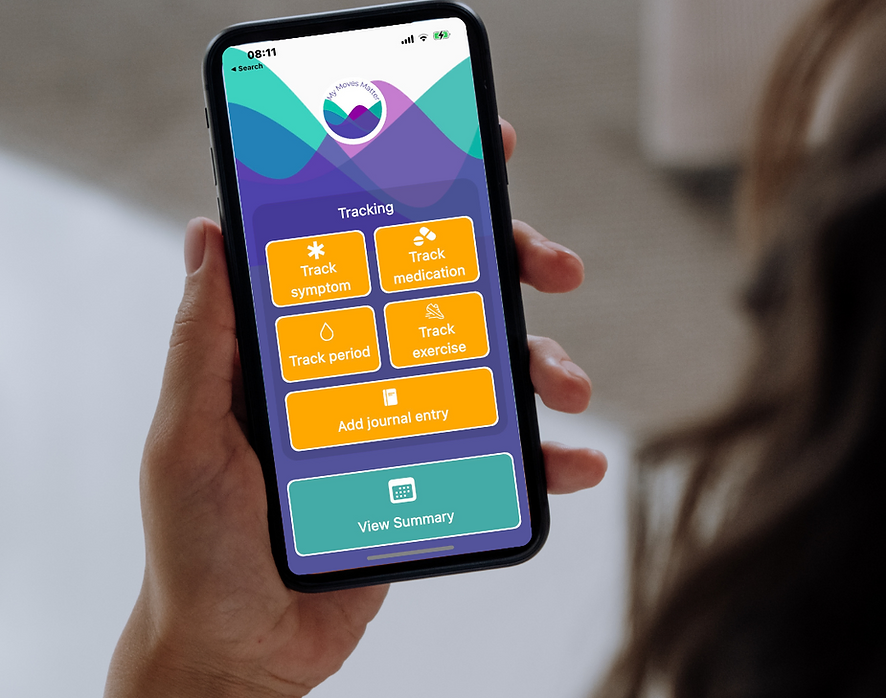
When you live with Parkinson’s, everything matters. What you eat, how well hydrated you are, how well you sleep and when you take your medication matters. Your exercise and hormonal fluctuations also impact how well you can live with Parkinson’s. 

But keeping track of it all is a full-time job, especially when you’re trying to hold down a job or look after kids or grandkids while living with a condition that impacts how you move and feel.

My Moves Matter Digital Self-Care Companion is here to support you and help you understand what works best for you to live your best life with Parkinson’s.
  • How? You can track your symptoms and more!
  • 📢 Can we count on you to participate? Aussie women with PD are invited to be part of this first-of-its-kind study and help us make a difference in the lives of women with Parkinson’s worldwide.

GO TO >> www.mymovesmatter.com/uccpilotstudy

Why women only? Women have the unique challenge of navigating PD whilst going through many hormonal stages in life, from those still menstruating through pregnancy, perimenopause, menopause and post-menopause. We are running a global, first-of-its-kind study in collaboration with Richelle Flanagan and researchers from University College Cork, Ireland, to understand the impact of these different stages of life on women with Parkinson’s. We are recruiting women of all ages living with Parkinson’s in Australia for this study.

The study runs until the end of this year, and we would love to encourage women in Australasia to participate.

Explanatory videos and a webinar explain the current research on women with PD. The webinar includes a researcher from UCC explaining the study: https://www.youtube.com/@MyMovesMatter.

(n.b. Men can use this app too, but the pilot study is only for women. We want to ensure Australian women are represented in this important international dataset, so please assist us!)


Share

Other articles

  • CARE TEAM | Support groups for carers & people with YOPD

    Whether you are newly diagnosed, well-versed in Parkinson's, or a care partner, finding the right support group can make a significant difference. Social activities provide a valuable network, combat feelings of loneliness, and connect you to new information. Being diagnosed as young onset, poses its own challenges in finding people a group of people that look like you.

  • NDIS | Understanding Your NDIS Plan

    Your NDIS plan is built around your goals and support needs and funding is divided into Core, Capital and Capacity Building budgets. Core funding is generally the most flexible. Capacity Building funding can support your allied health therapies (e.g. AEP, APD, Speech Pathology, Physiotherapy, OT, podiatry, psychology, social worker). Plan management offers flexibility while reducing administrative burden, but you have the option of self-management.

  • RELATIONSHIPS | Intimacy, Sexuality & Dating

    Parkinson’s can affect intimacy, sexuality and relationships in physical, emotional and practical ways. Sexual difficulties are common, but they are not experienced by everyone. Many people continue to have satisfying intimate relationships after diagnosis. Communication is one of the most important factors in maintaining intimacy and connection. Intimacy involves more than sexual activity. Touch, affection, companionship, emotional connection and shared experiences all contribute to healthy relationships. Professional support is available if Parkinson’s affects your sexual wellbeing, confidence or relationship.